Do great buildings make great cities?
Posted: December 19, 2011 Filed under: Architecture & buildings | Tags: Elizbaeth Farrelly, Graeme Jahn, great buildings, great cities, Nick Greiner, Stuart White, Sydney Opera House, UTS, Zunz Lecture 11 Comments
Utzon's competition-winning entry for the Sydney Opera House - fortunately, he liked oranges! (from SMH 30 Jan 1957)
I wish I could’ve been in Sydney on the 17th to attend UTS’s 10th Anniversary Special Zunz Lecture on the rather silly proposition that ‘Great buildings make great cities’. It would’ve been a giggle to see Nick Greiner, Elizabeth Farrelly, Graeme Jahn and Stuart White taking this pompous idea ever so seriously.
It’s true there are some great buildings in great cities. But there are some cities that have great buildings but aren’t themselves great. There are great cities that don’t have great buildings. Some great buildings aren’t even in cities. In fact some great buildings – like Mies’ Barcelona Pavilion and Rossi’s Teatro del Mondo – weren’t even intended to be permanent! And even in those cities with one or more great buildings, the best that could be said about most of the other 99.99% is they aren’t great.
I think it should be obvious Rome wasn’t a great city because of the Pantheon, but because it was a key centre of trade and political power over many centuries. Likewise London. But they’re European cities with millennia of history to draw on. New-world cities are a better reference for Sydney.
Few would argue that New York is one of the world’s great cities. It has some great structures too e.g. its rail stations, the Chrysler building, the Empire State building, the Brooklyn Bridge, and more lately the Highline.
But even the briefest glance at the magnificent book by Edwin Burrows and Mike Wallace, Gotham: a history of New York city to 1898, shows the overwhelming importance of complex social and economic forces in making Gotham one of the world’s great cities. With reputedly half of everything that ever entered the USA, including people, passing through New York, it would be a ridiculous conceit to argue the city is great because of its buildings.
It’s far more plausible that any line of causation runs the other way – New York has some great buildings because the city is great. Athens has the Parthenon because it was a great city, not the other way around. Bilbao doubtless has many virtues, but I haven’t heard it described too often as one of the world’s great cities just because its got a Guggenheim.
Sydneysiders suffer from Opera House Syndrome (OHS), so it’s no wonder they default to “starchitecture”. This unfortunate condition, which is characterised by blind hope and delusions of grandeur-on-the-cheap, is a direct consequence of the extraordinary good fortune of having not one but two internationally iconic structures – the Sydney Opera House and the Harbour Bridge. Like cargo cultists, they think they can make Sydney even greater through more starchitecture.
OHS is a terrible and merciless condition. Sufferers think their cherished international emblems are the reward for their city’s intrinsic qualities, like the vision, risk-taking and marketing savvy of its residents. The reality is that, like much in life, international icons are almost entirely the result of good luck – in fact extraordinary good luck.
We should all know by now that the Sydney Opera House was created in spite of Sydneysiders, not because of them. If it hadn’t been for Finnish architect, Eero Saarinen, it wouldn’t even have got a start.
The odds of a new-world city like Sydney having even one internationally iconic structure are astonishingly long (just ask Melbourne), but two is stratospheric. The odds of having more than two……and the likelihood Sydney could create yet another by intent…..well, we’re in the realm of metaphysics now.
I like to think that in Melbourne a debate like the Zunz lecture would be couched in different terms. At the very least, the proposition might be something like “great urban design makes great cities” or, preferably, “great urban design makes a better city”. They both recognise that it’s not individual buildings that make a difference but the overall feel of the city. The latter also acknowledges that the physical environment is only one factor that contributes to making a city great. Read the rest of this entry »
Would we build another Opera House?
Posted: May 23, 2011 Filed under: HSR High Speed Rail, Infrastructure | Tags: cost benefit analysis, Frank Gehry, High Speed Rail, icon, Sydney Opera House, tourism 9 Comments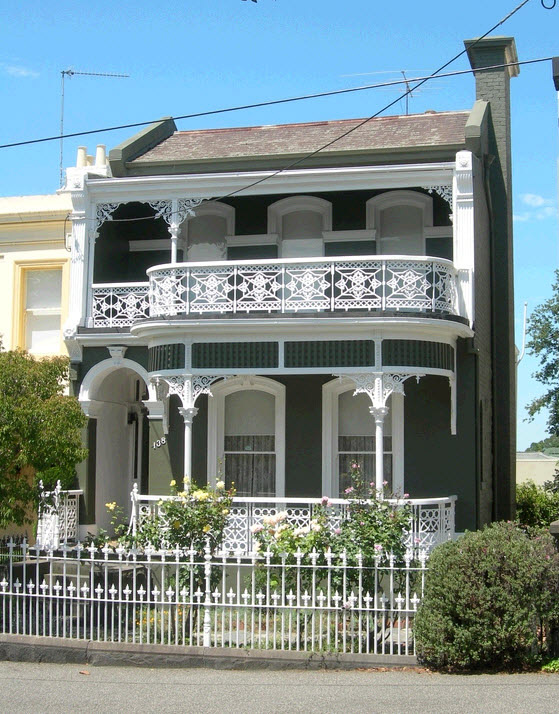
The other 'Melbourne Opera House' - Powlett St East Melbourne
An argument I see frequently in relation to massive infrastructure projects like High Speed Rail (HSR) is that we should simply get on and build them because they’re ‘visionary’ and ‘nation building’. For example, a commenter recently likened investment in HSR to the decision to build the Sydney Opera House. If cost-benefit analysis had been done on the Opera House, he argued, it would’ve been still-born. Thus we would’ve been denied the enormous tourism revenue and the boost to national pride provided by this magnificent building.
I expect he’s right. Formal cost-benefit analysis would probably be hard-pressed finding that the benefits of any opera house exceed the costs, either then or now. There’s therefore always a chance if you look too hard at the costs and the risks you could end up missing out on some whopping future benefits. However the problem with this sort of argument is that it’s based on hindsight. We know for a fact from the perspective of 2011 that the Opera House is a grand success. But cost-benefit analysis isn’t retrospective, it’s prospective – it helps us to evaluate projects before we commit to building them.
Here’s a “thought experiment”. Consider a contemporary proposal to spend a fantastic sum of money on (say) The Melbourne Opera House (insert your city of choice). Imagine an architect of Frank Gehry’s stature (but please not Frank himself!) was asked to ignore the cost and come up with a design that would create an “international icon”. The promise is the building would “put Melbourne on the map” and more than repay the preposterous cost over the years in tourism revenue and civic pride. Of course while it would nominally function as an opera house, what we’d really be building is a piece of architecture so powerful, distinctive and attractive, that it would be as iconic as……well, the Sydney Opera House.
The trouble is the probability of achieving this vision is close to zero. No one knows what the recipe for international icons is. We can look back and more or less pick out the vital decisions and factors that made the Sydney Opera House the symbol it is today, but doing it prospectively is close to impossible. We’d almost certainly end up with a Melbourne Opera House that was functionally compromised and cost billions more than it needed to, but which nobody outside Victoria gave a second glance.
Actually even if the Sydney Opera House planners knew with certainty in the late 1950s what we know now, I’m not sure building it would’ve been the “right” decision to take at the time. The Sydney Opera House didn’t instantly become an international symbol so most of the tourism and “icon” benefits, which probably didn’t kick in seriously until at least the 1980s, would’ve been heavily discounted back to the time the decision was taken to proceed. The net present value of the benefits might not have exceeded the cost of construction which, let’s not forget, was very high. Read the rest of this entry »
Is being “visionary” sufficient to justify new infrastructure?
Posted: August 11, 2010 Filed under: Infrastructure | Tags: High Speed Rail, Infrastructure, Melbourne Airport rail link, NBN, Ord River Irrigation Scheme, Robert Moses, Robert Risson, Snowy Mountains Scheme, Sydney Opera House, white elephants 2 Comments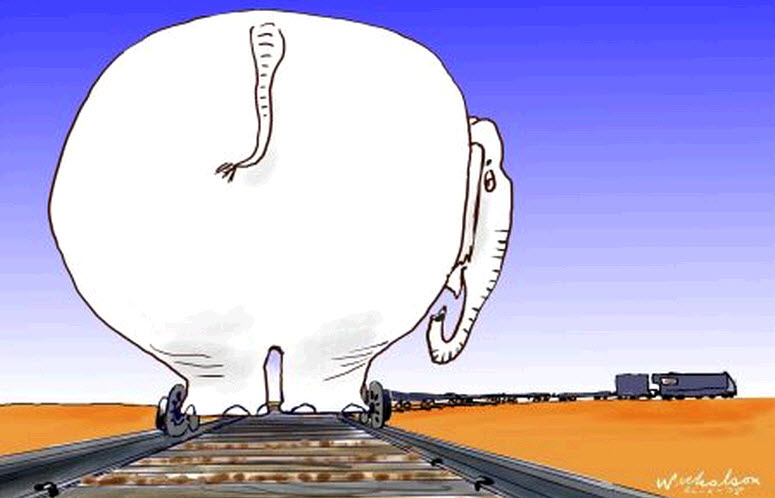 All the talk around at the moment about ‘visionary’ infrastructure projects like High Speed Rail (HSR), the National Broadband Network (NBN) and a rail link to Melbourne Airport, reminds me how much Australians love to gamble.
Big and costly projects that don’t stack up on conventional evaluation criteria are often justified as being in the ‘national interest’; or the result of ‘big thinking’; or comprehensible in the “big picture’; or contributing to ‘nation building’.
Proponents frequently resort to the Field of Dreams argument: “if it’s built, they will come”*. Some cite ambitious projects like the Snowy Mountains Scheme, the Ord River Scheme and the Sydney Opera House, contending that they would not have been built if it weren’t for some big thinking. However they conveniently omit to mention the downsides of these projects, or any ‘visionary’ schemes that are widely thought to be disappointments (let alone any that were unmitigated disasters).
More informed proponents will focus on the foresight of previous generations who built infrastructure like the national and urban rail systems, water supply and sewerage systems and the electricity generation and distribution networks. Some even mention the elaborate freeways within and between our major cities.
The argument is commonly put that if the visionary politicians, engineers and financiers of a century and more ago hadn’t looked beyond economic and financial criteria at the time, much of the infrastructure we value today would not be available for the use of current generations. And we are very fortunate they did, so this line of argument goes, because it would be impossibly expensive to provide infrastructure on that scale today.
That’s all very well, but I don’t think this interpretation tells the whole story. Read the rest of this entry »
 The Melbourne Urbanist