Is Melbourne the 2nd most liveable city in the world?
Posted: February 21, 2011 Filed under: Miscellaneous, Social and community | Tags: Economist Intelligence Unit, EIU, Global Liveability Report, Mercer, Property Council Australia 4 Comments
The Economist Intelligence Unit’s (EIU) 2011 Global Liveability Report says Melbourne is the 2nd most liveable city in the world, just behind Vancouver and up one place from 3rd last year. Sydney ranks 7th.
But any elation is likely to be short-lived. The Mercer Annual Quality of Living survey for 2011, due in late May, will very probably put Melbourne much further down the list. In Mercer’s 2009 and 2010 surveys, Melbourne slipped from 17th place to 18th place. Sydney ranked 10th in both years.
As I’ve pointed out before, these sorts of surveys shouldn’t be taken seriously as a guide to how liveable our cities really are. They have a number of shortcomings. Read the rest of this entry »
Will redevelopment of Fishermans Bend really be ‘revolutionary’?
Posted: February 19, 2011 Filed under: Planning | Tags: affordability, density, Docklands, Fishermans Bend, growth area, Housing, Inner city, Jennifer Cunich, Matthew Guy, Property Council Australia, UCB, Urban Growth Boundary 13 Comments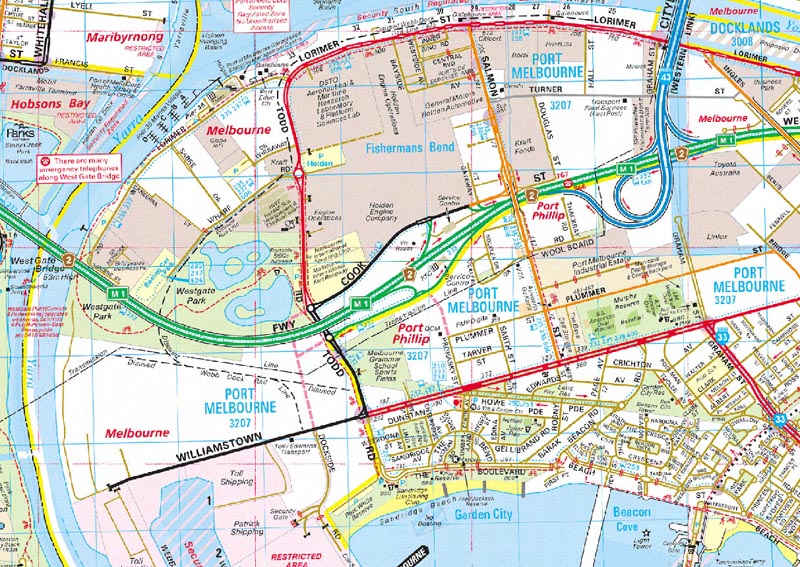 The Age breathlessly headlines the Government’s proposals for the redevelopment of Fishermans Bend as Premier Ted Baillieu’s “inner city housing revolution”. Planning Minister Matthew Guy says the area will evolve as ”Australia’s first inner-city growth corridor”.
Whoa there! I think it might be time for a relaxing cup of tea and a lie down. Let’s put these claims in perspective.
According to Mr Guy, the area under consideration is 200 Ha. That’s quite a bit smaller than the 41,000 Ha expansion of the Urban Growth Boundary approved last year.
Mr Guy also says the area is going to be developed over a 20-30 year time frame. If its total capacity is the 10,000 to 15,000 dwellings estimated by the Chief Executive of the Property Council, Jennifer Cunich, that’s at most 750 additional dwellings per year on average, and as few as 333 per year.
Just to put that in context, 42,509 dwellings were approved in the metropolitan area in the 12 months ending on 30 September 2010. Ms Cunich is quoted as saying even that’s less than we need – she says there’s a shortfall of 6,000 homes per year across the State.
While the redevelopment of Fishermans Bend is important, the claim that it’s a ‘revolution’ is hyperbole.
Likewise, the Minister’s claim that Fishermans Bend will be a ‘growth area’ – a term usually used to refer to massive outer suburban release areas – is more than a trifle exaggerated. Consider that 17,000 new dwellings were approved in Melbourne’s (outer) Growth Area municipalities in the year ending September Qtr 2010.
The Minister’s claim that the project will focus on “more affordable” housing also seems ambitious. Read the rest of this entry »
How liveable are our major cities?
Posted: January 30, 2011 Filed under: Miscellaneous, Planning | Tags: Adelaide, Brisbane, Liveability, Melbourne, Perth, Property Council Australia, Public transport, safety, security, Sydney, traffic congestion 15 Comments
How residents of our five largest cities (combined) see liveability
Adelaide is the most liveable capital city in Australia and Sydney is the least, according to a study released earlier this month by the Property Council of Australia.
The Australian reports that Sydney might have the harbour, Opera House and Bondi, but most Sydneysiders live a long way from these attractions in less salubrious places like Liverpool, Strathfield and Penrith.
The Property Council’s study is based on a national sample of 4,072 respondents in the nation’s eight capital cities (with around 600 in each of the four largest cities). They were given 17 attributes of liveability and asked, firstly, to rate them by importance and, secondly, to rate how well their cities perform on each of them. These two dimensions were then combined to produce a ‘liveability score’ for each city.
I’ve taken quite an interest in “liveability” in the past, especially as it relates to Sydney/Melbourne rivalry (e.g. here, here and here), so naturally I had a look at the study.
These sorts of surveys are often problematic and this one is no exception. For example, information on the representativeness of those who actually responded to the survey is scant and some of the attributes are sloppily conceptualised and poorly worded.
So with that caveat, let’s look at what the study found. The aggregate liveability scores of the eight capitals are probably the least useful aspect because the differences are small – Adelaide does best with 63.4 and Sydney does worst with 55.1. Third ranking Melbourne scores 60.9 but sixth ranking Brisbane scores 60.2. Put Sydney aside and there’s not enough in it to be useful.
What’s more interesting is how respondents define liveability. I’ve put the accompanying chart together to show how the five largest capital cities perform in aggregate i.e. Sydney, Melbourne, Brisbane, Perth, Adelaide (you won’t see this table in the Property Council’s report because I had to correct the figures in the Appendix to the report. Also, make sure to have a look at the full text of the questions).
The first column shows how important respondents think each attribute is for liveability (smaller is better). The second shows what proportion of respondents agree that their city exhibits this attribute. Read the rest of this entry »
 The Melbourne Urbanist