Can the NBN ‘save’ our cities?
Posted: August 24, 2010 Filed under: Decentralisation | Tags: Decentralisation, Docklands, National Broadband Network, regional development, Tony Windsor 5 Comments In yesterday’s post I asked if our largest capitals could grow bigger and remain liveable. Today I’m looking at the flipside – whether or not the National Broadband Network (NBN) will give regional centres the wherewithal to draw population growth away from Sydney and Melbourne.
This question is prompted by avuncular New England Independent, Tony Windsor, who argued on Q&A this week that the National Broadband Network could be a key driver of decentralisation:
“If there’s been a piece of infrastructure (if it’s done correctly) that negates distance as being a disadvantage of living in country Australia, this is it…..
“We’re going through a population debate at the moment. The election was about the people of western Sydney and western Melbourne and Dick Smith and others talking about how we’ve got to constrain the population of this nation. Nothing about regional Australia in that context. Nothing about the infrastructure out there. If we get the broadband system right it could revolutionise country living and solve some of the city-based problems”.
I’ve previously concluded (here, here, here and here) that the prospects for diverting growth from our cities to regional centres on a significant scale do not appear promising (other than if nearby regional centres become satellites i.e. de facto outer suburbs). However could the NBN, as Mr Windsor suggests, be the magic bullet? Read the rest of this entry »
Can our cities get bigger (and remain liveable)?
Posted: August 23, 2010 Filed under: Planning, Population | Tags: city size, Decentralisation, population growth 17 Comments The issue of decentralisation could be back on the table given the elevated significance of the three regionally-based independents*. I’ve previously argued (here and here) that there are big questions about the viability of decentralisation on a large scale, so today I want to look at whether or not our major cities can cope with more growth.
There was quite a bit of interest in the 60s and 70s around the idea of an efficient city size. The assumption that a point was reached where diseconomies of scale set in was part of the rationale for the failed decentralisation push of the Whitlam era.
There’s a better appreciation today that cities make structural adjustments in response to growth and may generate new economic advantages. There’s wide acceptance of the idea that productivity increases (modestly) as city size/density increases.
Australia’s major cities are certainly not bursting at the seams, notwithstanding residents’ concerns about issues like traffic congestion and housing affordability. Sydney is actually only the 80th largest city by population in the world and Melbourne the 87th. Many of the larger cities dwarf ours – Tokyo, for example, has more than nine times as many residents as Sydney. Read the rest of this entry »
Melbourne Bicycle Share – how about some balance?
Posted: August 19, 2010 Filed under: Cycling | Tags: Bixi, Cycling, Dublin, Melbourne Bicycle Share, Montreal, The Age 11 Comments No, I don’t agree with Alan Todd of Kyneton that Melbourne Bicycle Share is a winner and I’ve never thought it would be (see my previous posts here, here and here).
His letter to The Age this morning (“Share the smarts”) contends that bike share schemes have taken off in more than 135 cities around the world. “In any city that values public health, combined with a sustainable solution to transport and congestion problems, they would have to be a winner”, he says.
He also wants to see the compulsory helmet laws repealed so that Melbourne Bicycle Share can flourish.
I think the discussion around the Bixis is very confused. Too many people are mistaking policy on Bixis for policy on cycling. They’re very different – one’s a political stunt, the others real life.
Contrary to Mr Todd’s claim, Bixis won’t do anything whatsoever to reduce congestion even if their numbers are expanded. They are a substitute for walking and public transport in the CBD and near-CBD, not for cars. The sort of person who’s going to cycle at lunch time from Spring St to Melbourne Uni is not generally the sort of person who would otherwise drive. Read the rest of this entry »
Is Docklands a dog?
Posted: August 18, 2010 Filed under: Architecture & buildings, Planning | Tags: Docklands, Gold Coast, Lindsay Tanner, Southbank 15 Comments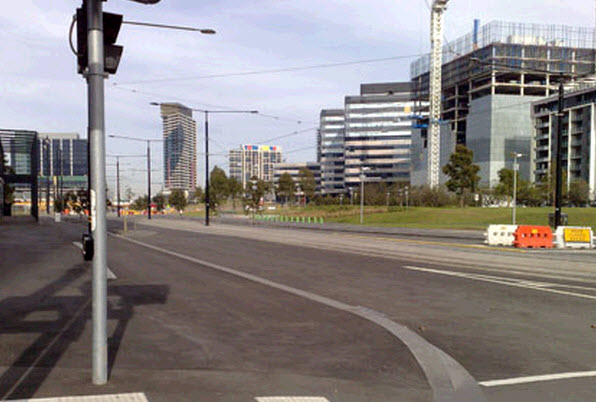
Picture by Ozsoapbox
I like dogs so I’d say Docklands is more like a mangy, flea-bitten hyena. It’s ugly, it’s shrill and it’s very ill-mannered.
As a friend and I cycled down Latrobe Street and over the railway bridge a few Sundays ago, I thought for a moment I was entering one of those anonymous, soulless suburban business parks that abound in the US.
I’ve written recently on how successful Docklands is as a business park so perhaps I shouldn’t have been surprised to see so much banal architecture in one place – not every building, but there’re far too few that aren’t tinted glass boxes.
The residential areas exude the very worst of the Gold Coast, even down to the vulgar attempts to “stand out” from the crowd. They’re as flash as a hyena with a gold tooth. If there’s such a thing as a “Melbourne architectural style” that draws on subtlety, wit, intellect, culture and life in a cold climate, then it’s turned its nose up at Docklands.
This was my first daytime leisure visit to Docklands in a while and it shocked me. I seriously don’t know how I ever imagined that one of Melbourne’s competitive advantages is its high standard of architecture. How could Melbourne produce this generic tripe? Read the rest of this entry »
W Class trams – is this a great opportunity?
Posted: August 17, 2010 Filed under: Public transport | Tags: Grand Circle, history, Market Street Railway, National Trust, San Francisco, streetcar, trams, W Class tram 3 Comments
Melbourne’s W Class trams have serious limitations when it comes to doing what urban transit systems are supposed to do – move people around efficiently and quickly.
But they might potentially provide enormous benefits – particularly in relation to tourism and city “branding” – that could make their continued operation (and expansion!) more than worthwhile.
Twenty five W Class trams currently operate on the 78/79 route (Chapel St) but the Minister for Transport says they will be phased out by 2012. Another twelve operate the free City Circle route. There are possibly another 200 W Class trams in storage.
While they exude history, they are old and more like museum pieces than components of a modern public transport system. The youngest models were built in the 1950s, but the design dates from the 1920s. So there is no denying that the W Class has many shortcomings for use on a contemporary transit network.
They are slow. They are not air conditioned. They don’t have low-floor access. They are extremely noisy. They are bumpy. They do not offer adequate protection to the driver in the event of a collision with another vehicle unless they run at speeds lower than 40 Km/hr. On mixed routes they would hold up faster and more efficient trams like those operating on the 109 route, preventing them from being used to their potential. Read the rest of this entry »
How much carbon are the candidates emitting?
Posted: August 16, 2010 Filed under: Energy & GHG | Tags: Boeing 747 400, carbon, greenhouse gas, Julia Gillard, Tony Abbott Leave a comment
Crikey's Election Tracker
Crikey’s Election Tracker reported today that Gillard has so far flown 39,431 km during the campaign and Abbott has flown 40,800 km.
I thought I’d take a ‘ballpark’ look at the carbon emissions associated with that travel.
For simplicity, I’ll assume they both flew all those kilometres in a standard jet such as a 150 seat Boeing 747 400. If I also assume a relatively high load factor like commercial carriers typically achieve, then Gillard’s personal carbon emissions so far are of the order of 6.2 tonnes and Abbott’s 6.4 tonnes (I’ve assumed 158g/passenger km, but there could be considerable variation depending on type of aircraft, load factors and distance. I’ve made no allowance for the altitude of discharge, so I’m treating this as a simple “order of magnitude” estimate) .
At the rate of around $25/tonne propounded by the Greens, they could each offset their personal emissions on the international market for little more than $150. Read the rest of this entry »
Are Melbourne’s trains really getting safer?
Posted: August 15, 2010 Filed under: Public transport | Tags: Auditor General, crime, safety, trains 2 Comments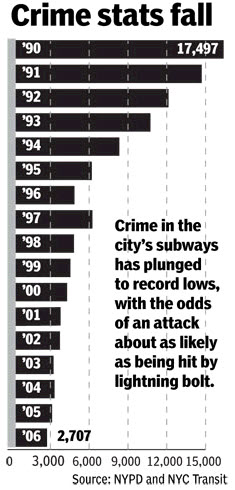
Offences on NYC's subway have fallen
A new report on the safety of Melbourne’s trains says they are getting safer. Reported offences fell from 45 per million passenger boardings in 2005-06 to 33 in 2008-09. That’s a phenomenal 27% reduction.
The report, titled Personal Safety and Security on the Metropolitan Train System, was prepared by the Victorian Auditor General and released publicly on 9 June 2010, shortly after a mob attacked a train at McKinnon station.
While the statistics look good, the report also says that passenger’s perceptions of safety on trains nevertheless got worse over the same period and are significantly lower than for trams and buses. Passengers feel reasonably safe during daylight hours but markedly less safe at night, not only in trains but also on stations and in car parks.
An initial observation is that 33 offences per million boardings is actually not that good. For example, crime is much lower on the New York City subway (see chart -shows absolute numbers), which carries ten million passengers on an average work day. The Boston rail system carries 350 million passengers per year with only 2.2 crimes per million boardings.
But what I want to look at is the puzzling matter of why passengers feel less safe on Melbourne’s trains even though crime is apparently falling.
Disappointingly, the Auditor General’s report doesn’t seek to explain why they are out of kilter. The implication seems to be that passenger’s perceptions are irrational and shaped by the media. Read the rest of this entry »
Is Docklands sinking Melbourne @ 5 Million?
Posted: August 12, 2010 Filed under: Activity centres, Planning | Tags: Central Activities Districts, Docklands, Employment, Melbourne 2030, Melbourne @ 5 Million 4 Comments Docklands has been roundly and rightly criticised for its appalling urban design but it has nevertheless been spectacularly successful in attracting business to locate by the water.
In fact it has been so successful that I wonder what the implications are for office space markets in the rest of Melbourne, not just in the CBD and near-CBD markets, but in particular in the six major suburban activity centres envisaged in Melbourne @ 5 Million i.e. Footscray, Broadmeadows, Box Hill, Ringwood, Dandenong and Frankston.
The recent announcement that the headquarters of the National Broadband Network Company would be located in Docklands merely continues the momentum already established in the area in and around the old docks. Current tenants of this end of town include the National Australia Bank, ANZ, Myer, National Foods, CSC, Fairfax Media, Customs, Channel 7, AFL and the Australian Tax Office.
Other organisations planning to move to the area include Melbourne Water, BP, Channel Nine and Chartis Australia. Even the Demons have been mooted as prospective tenants of a new training park (or stadium) proposed for the precinct. Read the rest of this entry »
Is being “visionary” sufficient to justify new infrastructure?
Posted: August 11, 2010 Filed under: Infrastructure | Tags: High Speed Rail, Infrastructure, Melbourne Airport rail link, NBN, Ord River Irrigation Scheme, Robert Moses, Robert Risson, Snowy Mountains Scheme, Sydney Opera House, white elephants 2 Comments All the talk around at the moment about ‘visionary’ infrastructure projects like High Speed Rail (HSR), the National Broadband Network (NBN) and a rail link to Melbourne Airport, reminds me how much Australians love to gamble.
Big and costly projects that don’t stack up on conventional evaluation criteria are often justified as being in the ‘national interest’; or the result of ‘big thinking’; or comprehensible in the “big picture’; or contributing to ‘nation building’.
Proponents frequently resort to the Field of Dreams argument: “if it’s built, they will come”*. Some cite ambitious projects like the Snowy Mountains Scheme, the Ord River Scheme and the Sydney Opera House, contending that they would not have been built if it weren’t for some big thinking. However they conveniently omit to mention the downsides of these projects, or any ‘visionary’ schemes that are widely thought to be disappointments (let alone any that were unmitigated disasters).
More informed proponents will focus on the foresight of previous generations who built infrastructure like the national and urban rail systems, water supply and sewerage systems and the electricity generation and distribution networks. Some even mention the elaborate freeways within and between our major cities.
The argument is commonly put that if the visionary politicians, engineers and financiers of a century and more ago hadn’t looked beyond economic and financial criteria at the time, much of the infrastructure we value today would not be available for the use of current generations. And we are very fortunate they did, so this line of argument goes, because it would be impossibly expensive to provide infrastructure on that scale today.
That’s all very well, but I don’t think this interpretation tells the whole story. Read the rest of this entry »
Should public transport fares to the airport be subsidised?
Posted: August 10, 2010 Filed under: Airports & aviation, Public transport | Tags: Every 10 Minutes to Everywhere, Melbourne airport, Metlink, Public transport, Public Transport Users Association, rail link, Skybus, Smartbus 13 Comments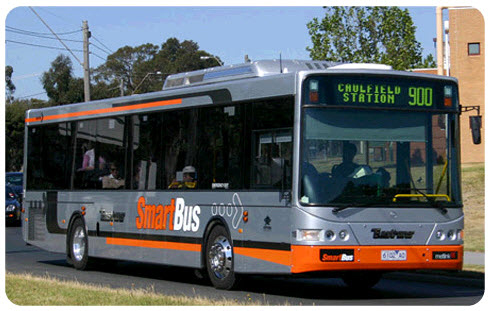 Yesterday’s discussion of an airport-CBD rail link prompts me to look further at the idea that airport users have a “right” to public transport priced at the standard Metlink tariff.
My first reaction is that the idea makes sense. After all, everywhere else in Melbourne is provided with public transport subsidised by the Government (no matter how inadequate it might be). Melbourne Airport is also one of the largest suburban activity centres in the metropolitan area, with around 12,000 workers.
If travel to and from the Airport were charged in accordance with the Metlink tariff, the fare to the CBD would be the standard Zone 1-2 fare of $5.80 one-way. But while it might be the equitable solution it doesn’t follow that it’s the sensible one, the necessary one, or the one that’s in the best interests of all Melburnians. Read the rest of this entry »
Would an airport rail link take us for a ride?
Posted: August 9, 2010 Filed under: Airports & aviation, Infrastructure, Public transport | Tags: Essential Economics, Melbourne airport, rail link, Skybus 15 Comments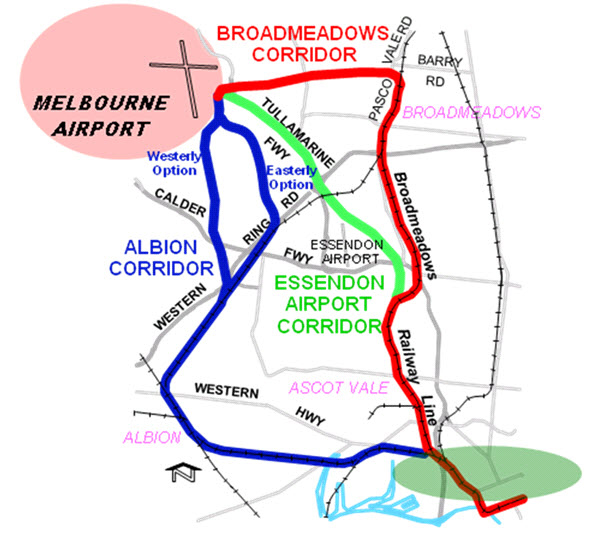
Possible corridors for an airport rail link identified by DoT
A senior economist at Essential Economics, Sean Stephens, has joined the debate about a rail link from the CBD to Melbourne Airport, arguing in The Age last week that “a rail link would help Melbourne maintain its world-class status, where visitors and locals could access Melbourne Airport, our gateway to the world, with ease and convenience”.
There are some misconceptions in the article and an evident misunderstanding of existing public transport services between the airport and the CBD.
The main supplier is Skybus, a privately operated and profitable operation that carries two million passengers per annum, or about 8% of airport passenger traffic. Skybus operates a 24 hour service (with 10-15 minute frequencies between 4am and 11.45pm). Because Skybus makes use of the emergency lane on the freeway, it takes 20 minutes from the airport to the CBD in the off-peak and up to 40 minutes in the peak.
Also, from next year, the Government will extend operation of the existing Frankston to Ringwood Yellow Smartbus service to connect with Melbourne Airport via Broadmeadows station. Buses will operate every 15 minutes with ticket prices based on the standard Metlink fare structure.
Mr Stephen’s only concrete criticism of Skybus is that the fares are too expensive and “well above those of comparable cities that provide a rail link”. In fact Skybus tickets cost $16 one way, much the same as those on the Sydney ($15) and Brisbane ($15) airport rail systems, notwithstanding Melbourne airport’s greater distance from the CBD. Skybus offers airport workers a discounted fare. Read the rest of this entry »
Will miners, retirees and the NBN drive Tony Burke’s decentralisation agenda?
Posted: August 8, 2010 Filed under: Decentralisation | Tags: broadband, Decentralisation, Minister for Sustainable Population, National Broadband Network, National Press Club, NBN, Roebourne Shire, Tony Burke 4 Comments
Grey areas show parts of Victoria without access to Broadband (mainly ADSL)
It’s easy to see why that most Whitlamesque of policies – decentralisation – has been revived in this election campaign. Not only does it offer the familiar prospect of more jobs and economic activity in regional areas, it can also be sold as improving the quality of life in our crowded, heaving cities.
However I think the Minister for Sustainable Population, Tony Burke, is stretching credibility with his latest claim about what’s driving decentralisation.
Speaking at the National Press Club debate last Thursday, Mr Burke argued that the decentralisation debate is different now to what it was 40 years ago. Then, he argues, it was all about moving people to regional areas by relocating government departments. Now however decentralisation is:
“being driven by the market through the movement of retirees, through the mining boom and through the roll-out of the National Broadband Network, which allows businesses that previously could only be located in the heart of the CBD to locate in other areas”
His use of the present tense is curious because there’s little evidence of actual decentralisation away from Australia’s two ‘super cities’ – Sydney and Melbourne – to regional centres over the last five years. Sydney grew 1.4% p.a. over 2004-05 whereas regional NSW grew by 1.1%. In Victoria, Melbourne grew 2% p.a. but the remainder of the State grew 1.4% p.a.
But it’s the drivers of growth he cites that I find even more curious. Read the rest of this entry »
The Paul Krugman blues
Posted: August 6, 2010 Filed under: Miscellaneous | Tags: blues, Loudon Wainright, paul krugman Leave a comment Loudon Wainright 111 sings his homage to Nobel Laureate in economics and New York Times columnist, Paul Krugman.
Does Labor’s Sydney-Newcastle High Speed train make sense?
Posted: August 5, 2010 Filed under: HSR High Speed Rail, Infrastructure, Public transport | Tags: Albanese, High Speed Rail, HSR, Newcastle, Sydney, VFT 9 Comments
The car-eating "straddle" train
I watched Anthony Albanese foreshadow on Lateline on Wednesday night that the Government, if re-elected, would fund a $20 million feasibility study of a high speed rail connection between Sydney and Newcastle as part of a Sydney-Brisbane route.
The Minister’s subseqent announcement on Thursday puts more emphasis on an east coast Brisbane-Sydney-Melbourne HSR but it seems clear the Central Coast is a key target of the initiative (Robertson is a marginal seat).
The announcement was greeted with some scepticism – an HSR link between Sydney and Newcastle was announced by Bob Carr twelve years ago. Crikey’s Canberra correspondent, Bernard Keane, reckons Labor isn’t serious about HSR and is only pretending.
Provided the focus is on Sydney-Newcastle, I think there are some reasonable aspects to this initiative notwithstanding its apparent political motivation. Read the rest of this entry »
Who does Google like the most – Julia or Tony?
Posted: August 4, 2010 Filed under: Miscellaneous | Tags: Google Search, Julia Gillard, Tony Abbott Leave a commentGoogle is being used for respectable academic research on issues like economic activity and health epidemics (for example, see this paper on how the recession in the US is impacting concern for the environment), so I thought I’d see how Julia Gillard is faring in terms of internet interest compared with Tony Abbott.
The first graph compares Google searches on ‘Gillard’ (red) and ‘Abbott’ (blue) over the last 30 days (up to August 1) within Australia.

Google says the numbers on the graph “reflect how many searches have been done for a particular term, relative to the total number of searches done on Google over time. They don’t represent absolute search volume numbers, because the data is normalized and presented on a scale from 0-100. Each point on the graph is divided by the highest point, or 100. When we don’t have enough data, 0 is shown”. Read the rest of this entry »
Will a carbon tax double the price of petrol?
Posted: August 3, 2010 Filed under: Cars & traffic, Energy & GHG | Tags: carbon price, Cleaner Car Rebate, CSIRO, ETS, Harry Clarke, John Quiggin, Mandatory Emission Standards, petrol, Tony Abbott 5 Comments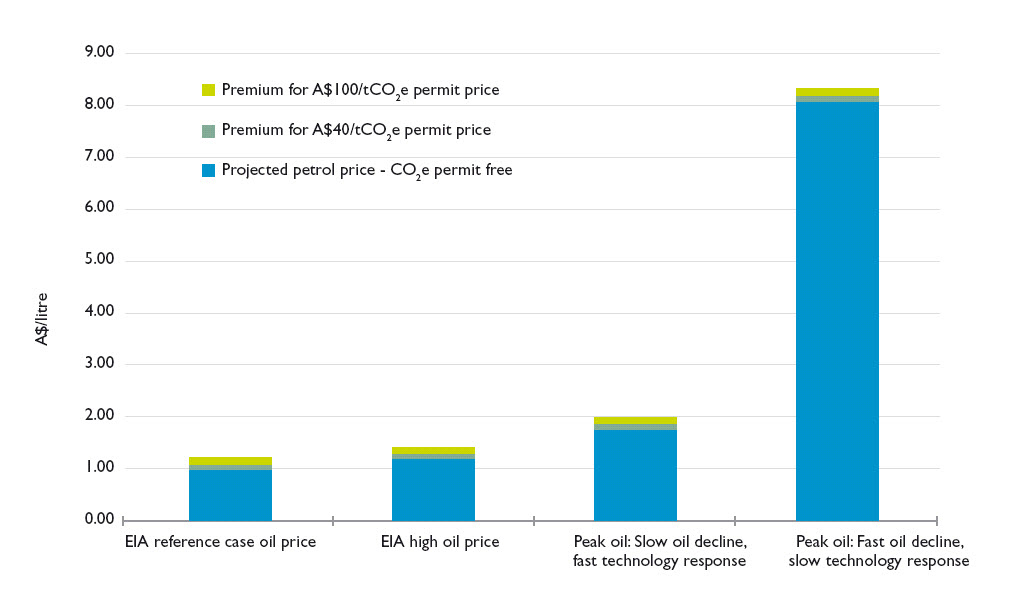
Possible future petrol prices under different oil market/carbon price scenarios (CSIRO)
Tony Abbott made a surprising claim on Sunday that a $40/tonne carbon tax would increase the retail price of electricity by 100%. Fortunately, John Quiggin has ‘done the maths’ on Abbott’s assertion and points out that it would result in a much lower increase in the retail price to households – around 20%.
So let’s look at the likely effect of a carbon tax on the price of petrol. This CSIRO report, Fuel for Thought, estimates that a $40/tonne emissions permit would only increase the retail price of petrol by 10 cents per litre. So the additional cost of the $23/tonne carbon price touted by the Greens would seem to be no more than the weekly fluctuations in price at my local servo!
That’s hardly a great big new tax. But what’s important from a policy perspective is that a price on carbon of this order isn’t really going to have a significant effect on what we drive and how we drive. Read the rest of this entry »
What will high speed rail do for regional development?
Posted: August 2, 2010 Filed under: Decentralisation, HSR High Speed Rail, Infrastructure, Public transport | Tags: albury, Decentralisation, High Speed Rail, regional centres, very fast train, wodonga 12 Comments
Albury-Wodonga
Yesterday I looked at the carbon reduction justification for high speed rail between Sydney and Melbourne. Today I want to discuss another argument – that high speed rail will promote the development of regional centres. It is argued that this could in turn relieve capital cities of much of the burden of projected population growth.
I have no doubt that improving connection times between regional centres like Albury-Wodonga and Melbourne will benefit both.
But if regional centres are to be a serious alternative for growth, they will need to provide new arrivals with jobs. The question I ask is: where are those jobs going to come from?
One way could be that regional centres provide a “dormitory” for workers who can live in the country but commute to work in capital cities like Melbourne by high speed rail. Read the rest of this entry »
High speed rail – are the Greens as shallow as the rest?
Posted: August 1, 2010 Filed under: Energy & GHG, HSR High Speed Rail, Infrastructure, Public transport | Tags: Bob Brown, High Speed Rail, Julia Gillard, The Greens, Tony Abbott, very fast train 12 Comments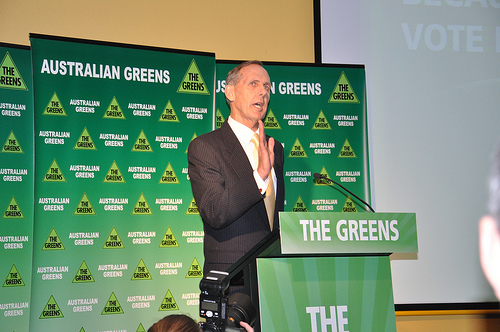 Bob Brown let us know yesterday with his call for a high speed rail link from Brisbane to Melbourne that the Greens are just as susceptible to populism as Julia Gillard and Tony Abbott.
In April he costed a Sydney-Canberra-Melbourne link at more than $40 billion. Yesterday he pointed to a survey commissioned by the Greens showing 74% of Australians support high speed rail. That’s not surprising because it is an attractive and beguiling idea – 94% of readers of The Age support it. After all, China and Europe can’t seem to build enough high speed rail and President Obama has grand plans for an extensive network in the US.
The idea of some form of very fast train service connecting Sydney-Canberra-Melbourne has been around at least since the 1980s. A number of feasibility studies have been undertaken, all of which concluded that it wouldn’t be feasible without massive Government assistance. So it’s worth asking a few questions:
- why would we want to commit billions in Government subsidies to replace one form of public transport (planes) with another (trains)?
- why would we want to replace the four airlines that currently compete vigorously on price and service on this route with a single monopoly rail operator? Read the rest of this entry »
Jewel goes undercover
Posted: July 31, 2010 Filed under: Miscellaneous | Tags: happiness, Jewel, Karaoke, undercover 2 Comments
Click through to video
One of the most popular recent articles on The Melbourne Urbanist was one on happiness (What makes you happy?) that I put up back at the start of the month.
It was based on a research paper which looked at which events have the highest positive effect on happiness.
This video is more practical – it shows what unalloyed delight and elation look like. It covers the singer Jewel singing her own songs incognito at a karaoke bar.
The excitement of the patrons when they hear how good this apparently ordinary woman is at singing Jewel’s songs is a joy to behold.
Are wind turbines a danger to birds?
Posted: July 29, 2010 Filed under: Energy & GHG, Infrastructure | Tags: bird deaths, bird strikes, National Research Council of the National Academies, wind turbine 1 Comment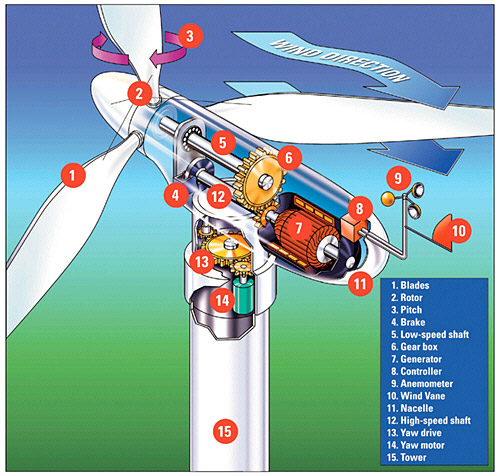 A common objection to wind turbines is that they’re dangerous for birds. Alex Tabarrok at Marginal Revolution reports that the number of birds killed by wind turbines in the US is between 20,000 and 37,000 annually.
He draws on data from this report by the Committee on Environmental Impacts of Wind Energy Projects, (US) National Research Council of the National Academies.
The report puts the bird strikes from turbines into context with annual estimates for deaths in the US from other causes (the wide ranges in the estimates indicate this is not an exact science):
Collisions with buildings: 97 – 976 million
Collisions with high tension lines: 130 – 1,000 million
Collisions with communication towers: 4 – 50 million
Collisions with cars: more than 80 million
Toxic chemicals: more than 72 million
Cats: more than a billion
BP oil spill: more than two thousand to date Read the rest of this entry »
 The Melbourne Urbanist