Sydney or Melbourne – which is more liveable (part 2)?
Posted: May 31, 2010 Filed under: Miscellaneous, Planning | Tags: Liveability, Mercer, The Economist Intelligence Unit 5 CommentsI noted on Friday that the 2010 Mercer annual quality of living survey says Sydney is more liveable than Melbourne.
However neither of these surveys define what liveability is from the point of view of the residents of a city, begging the question: what makes one city more liveable than another? And in particular, which is more liveable, Sydney or Melbourne?
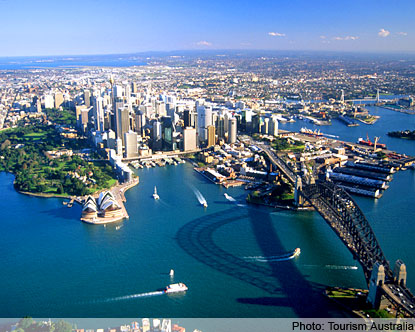
The strategic plan for Melbourne, Melbourne 2030, uses the term liveability liberally and even asserts that the plan’s “main purpose is to continue to protect the liveability of established areas” (page 1). It lists liveability as one of the city’s key strengths, but this is the closest it comes to a definition (page 23):
“liveability: metropolitan Melbourne overflows with sporting, cultural and recreational opportunity; the public transport system makes the city generally easy to traverse; health and safety standards are high, as is environmental quality; metropolitan Melbourne and the surrounding region has outstanding natural landscapes and coastlines”
At page 40, liveability is summarised as “quality of life, security, amenities, etc” and at page 50, in the context of activity centres, it is summarised again, this time as “safety, convenience, comfort and aesthetics”.
This is all a bit inexact. Whether the authors quite meant it or not, it seems implicitly to define the liveability of Melbourne as the quality of the public realm i.e. life outside the front door of residents’ houses and workplaces. The focus seems to be on ease of mobility, safety, leisure opportunities and the quality of the natural and human-constructed environments. Read the rest of this entry »
Is Sydney really more liveable than Melbourne (part 1)?
Posted: May 28, 2010 Filed under: Miscellaneous, Planning | Tags: Brisbane, expatriate, Liveability, Melbourne, Mercer, Sydney, The Economist Intelligence Unit 6 CommentsOn Wednesday the Sydney Morning Herald reported the release of the 2010 Mercer annual quality of living survey with the headline, “Sydney beats Melbourne in world’s top cities league”.
This is not news. Sydney beat Melbourne in the 2009 Mercer survey too. Sydney has stayed in 10th position and Melbourne has “slipped” from 17th to 18th out of 221 cities across the world.

Victorian politicians prefer to reference the annual survey done by The Economist Intelligence Unit. Its 2010 Global Liveability Report ranks Melbourne 3rd after Vancouver and Vienna. Sydney is ranked 7th.
Do these surveys really indicate that Sydney is more “liveable” than Melbourne, or vice versa? No, they don’t.
For one thing, the difference in scores is miniscule. In the Mercer survey, Sydney scored 106 points to Melbourne’s 105. In The Economist’s survey Melbourne scored 97 and Sydney 96.
Clearly rankings give a misleading impression of the two cities relative merits.
These sorts of surveys have been criticised on a number of grounds, including lack of transparency about their methodologies, definitions and quality of data. But that criticism misses the point that they are designed for a different purpose – to assist companies determine living allowances for staff posted to an overseas destination. The lower the city ranks, the higher the compensating allowance. Read the rest of this entry »
Does the housing dollar buy more in Melbourne?
Posted: May 25, 2010 Filed under: Housing, Planning | Tags: affordability, capital cities, Financial Review, house prices, Melbourne, RP Data, Sydney 3 CommentsYes! Compared to Sydney, you get 11 km closer to the city centre in Melbourne and pay $70,000 less!
The Financial Review ran an interesting article on Saturday titled Only units deliver median inner glow. It’s paywalled, but I’ve made two graphs (click to enlarge) based on information it presents in a table on house and unit prices. The data was compiled by RP Data.
The Financial Review’s emphasis was on affordability however the sophisticated readers of this blog will appreciate that there’s a more interesting story here (although with a caveat – I haven’t seen RP Data’s full set of numbers as they’re subscription only).

Figure 1 (based on numbers prepared by RP Data)
Figure 1 shows that a buyer has to travel 23 km from the CBD in Sydney in order to obtain a house at the median price of $500,000. However in Melbourne the median house costs considerably less – $430,000 – and, more importantly, you only have to go 12 km out to find it. All this even though the population difference is only around 500,000 people – 4 million in Melbourne vs 4.5 million in Sydney.
Thus the bundle of locational services available in Melbourne for the dollar is significantly better than in our older sister up the Hume. Those services relate to the special attractions of proximity to the city centre – high level corporate and government jobs, recreational and cultural facilities, private schools, entertainment, etc.
The value of the city centre is brought home by that quintessential icon of Melbourne, the footy. The only place you can attend an AFL game within Melbourne nowadays is in the centre. And being 12 km from the CBD will usually be a better location than points further out for accessing Melbourne’s wealth of suburban jobs and for being closer to family. No wonder migrants are beating a path to Melbourne rather than Sydney. Read the rest of this entry »
Stop making sense!
Posted: May 22, 2010 Filed under: Planning | Tags: Atlanta, Bicycle Diaries, bicycles, David Byrne, new urbanism, Talking Heads Leave a comment David Byrne on bicycles, Atlanta’s sprawl and burying highways.
On New York: “If I had a magic wand — ahhh, that’s easy — I’d bury the highways, as they’ve done in some other cities. The West Side Highway and the FDR would both go underground, with parks on top that link the city and its people to their waterfront. Cafes, clubs and recreational stuff too. It would be glorious”.
David Byrne at Atlanta new urbanism conference (too late, it finishes today)
David Byrne’s book, Bicycle Diaries. He’s been riding his bike in New York since the 80s.
David Byrne on Paris’s bike sharing scheme
And David Byrne on Houston – land of the free
Is the urban fringe getting bigger?
Posted: May 21, 2010 Filed under: Growth Areas, Housing, Planning | Tags: First Home Owners Grant, growth areas, Melbourne 2030, Melbourne @ 5 Million, Steve Keen, suburbs, urban fringe 4 CommentsThe proportion of new dwelling commencements planned for the outer suburban growth areas increased sharply between the release of Melbourne 2030 in 2003 and the release of the revised strategy, Melbourne @ 5 Million, in October 2008.
Melbourne 2030 envisaged 31% of dwelling starts would be located in the growth areas over the period to 2030 (page 30). It expected virtually all the rest would be located within the established suburbs, either clustered around major activity centres or dispersed across the suburbs.

Residential forecasts by region, Melbourne 2030 (click to enlarge)
The subsequent update, Melbourne @ 5 Million, made a dramatic change. It increased the proportion of dwellings expected to be constructed in outer suburban growth areas to 47% – half as much again as envisaged by Melbourne 2030 (page 3).
This change was consistent with the reality of what was happening in the market.
The authors of Melbourne 2030 probably felt at the time that 31% was a reasonable “stretch” target. Over the four years from 96/97 to 00/01, only 38% of new commencements were in the growth areas.
However four years is a short period to use as a basis for policy. As it happened this was a relatively quiet period compared to the boom that followed. Read the rest of this entry »
Are lots smaller in the outer suburbs than in the inner suburbs?
Posted: May 17, 2010 Filed under: Growth Areas, Housing, Planning | Tags: Craigieburn, Highlands, Inner city, inner suburbs, Oliver Hulme, outer suburbs, RP Data, small lot housing, Stockton 7 CommentsThe Financial Review (paywalled) reported on Saturday that the average house sold within 10 km of the CBD in Melbourne is located on a 511 m2 block, according to data collected by property information provider, RP Data.

Central Green, Highlands, Craigieburn - some lots are 213 sq m (click to enlarge)
Of course there is considerable variation in property types within that average. Houses in the inner city (0-5 km) are predominantly terraces on small lots whereas those in the inner suburbs (5-10 km) are predominantly detached houses on larger lots.
However what is especially interesting about this statistic is how it compares with the outer suburbs. The median size of lots sold in the Growth Areas is currently 513 m2, according to property consultants, Oliver Hume.
In other words, the average lot size is much the same in the two areas.
This is surprising, but a number of caveats are in order. First, some of the properties closer to the CBD would be destined for redevelopment whereas that seems unlikely in the Growth Areas. Read the rest of this entry »
Are cul de sacs a curse?
Posted: May 14, 2010 Filed under: Cars & traffic, Planning | Tags: Ballard, cul de sac, grid, growth areas, new urbanism, Seattle, Washington, Woodinville 5 CommentsOne of the tenets of new urbanism is that streets should be laid out in a rectilinear grid to maximise connectivity i.e. to minimise public transport and walking distances.
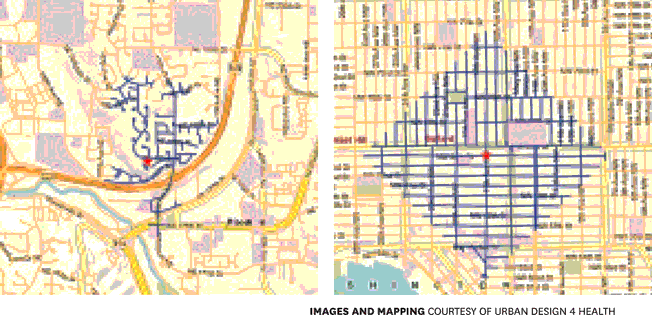
This research project in Seattle seems to confirm the wisdom of that principle. It compared the distance travelled by residents of two neighbourhoods and found that in Woodinville, where the dominant street form is the cul de sac, residents travel 26% more kilometres than residents of Ballard, where streets are laid out in a rectilinear grid.
As it happens, I’ve spent a fair bit of my life living on a “no through road” or similar street form and I think the advantages of cul de sacs are too often neglected. I grew up in a closed street, lived for six years in a mews and currently live with my family in a short cul de sac created in the 1950s when a larger property was subdivided into seven lots.
The great advantage of the cul de sac is low traffic. When my children were very young my wife and I were relaxed about them playing in the street because the only cars that entered the street were residents or their visitors. And for that same reason we don’t have issues with traffic noise like we used to have in North Fitzroy. These are major advantages and should not be dismissed lightly.
But cul de sacs have another advantage. If they’re not too long, they can create a sense of a place that is shared or “owned” by a small number of residents. We got to know all our neighbours well, shared child supervision responsibilities and even had an annual lunch in the middle of the road. Read the rest of this entry »
Can inner city apartments save us from sprawl?
Posted: May 13, 2010 Filed under: Housing, Planning | Tags: apartments, dwelling size, Inner city, inner suburbs, Melbourne, prices, sprawl, suburban fringe 7 CommentsHere’s compelling evidence that inner city apartments are not substitutes for fringe development despite oft-repeated claims to the contrary.
The Age reported yesterday that the average size of new two-bedroom apartments under construction in Melbourne is just 73 m2, while the average size of one-bedroom apartments is 51 m2 and studio apartments 34 m2.

SEE apartments, Claremont St, South Yarra
More than three quarters of the 5,600 units currently being built are located in central areas, mostly in the Melbourne, Stonnington and Yarra municipalities. A spokesperson from property group Oliver Hulme says that the median size of apartments in the inner municipalities is no smaller than those in outer suburbs.
I must say I’m staggered by how little space you get for your money. According to the report, the entry-level median price for newly built two-bedroom apartments is around $530,000. Corresponding prices for one-bedroom and studio apartments are $379,000 and $302,500 respectively. It seems inner city buyers subscribe strongly to the “location, location, location” maxim.
In contrast, the median house and land package in Melbourne’s outer suburban growth areas costs around $383,500 and the median dwelling size is 219 m2. It’s even cheaper in Cardinia in Melbourne’s outer South East, where the median dwelling is 186 m2 and together with land costs $334,500 on average.
Clearly the inner city and the outer suburban growth areas are entirely different markets! The average size of apartments is probably reduced by the current high rate of social housing construction but I doubt that’s significant enough to explain the enormous difference between the two markets. Read the rest of this entry »
What caused inner city gentrification?
Posted: May 12, 2010 Filed under: Planning | Tags: gentrification, Inner city, Melbourne 5 CommentsPaul Krugman once said that while we can make a reasonable fist of unpicking how a city developed historically, it is virtually impossible to predict where it might go in the future.
Could anyone in the 1950s or 1960s have confidently predicted the extent of gentrification of Melbourne’s inner city? Looking back we can attempt to identify some of the key forces that produced the inner city revival and see just how difficult it would have been to predict.

Photo by ExTester
The starting point was the departure of manufacturing for the suburbs which began in earnest in the 1950s. This exodus was driven by a number of factors, including new ‘horizontal production’ methods, reductions in the cost of truck transport, increasing traffic congestion in the inner city and the suburbanisation of much of the blue collar workforce.
What it did was crucial – it made the inner city a much more pleasant place to live in.
The rapid expansion in higher education in the 60s and 70s introduced many staff and students to the lifestyle possibilities of the inner city. House prices were competitive with the fringe suburbs, at least in the early decades of gentrification, in part because many of the (former) migrant families who occupied inner city housing aspired to live in the suburbs.
Later, declining household size – itself the product of upstream changes in factors such as fertility – meant inner city dwellings provided more space per person, especially for the expanding cohort of professionals who worked in the CBD. They married later, had fewer children and hence required less space (although terraces could easily be renovated and extended). Read the rest of this entry »
Do “brownfields” sites matter?
Posted: May 11, 2010 Filed under: Housing, Planning | Tags: Brownfields, Challenge Melbourne, medium density housing, Melbourne 2030, Melbourne @ 5 Million 3 CommentsI was leafing through Challenge Melbourne, the discussion paper released in 2001 as part of the Melbourne 2030 process, the other day. This very interesting but apparently long-forgotten factoid caught my attention:
“Capacity for an estimated 65,000 dwellings on large sites such as old factories has been identified in the established suburbs”.
Given that the number of households in Melbourne is projected in Victoria in Future to grow by 825,000 between 2006 and 2036, it seems the potential contribution from “brownfields” sites – mainly large disused industrial and public sector sites – will be modest.

Melbourne @ 5 Million envisages that 53% of the required new dwellings will be located within the established suburbs. If the 65,000 figure is even broadly close to the mark, it seems that the great bulk of this new housing will have to come from redevelopment of small sites, most of which are presumably residential and likely to generate significant opposition from neighbours.
The key issue this raises is whether or not the anticipated level of redevelopment in established suburbs is achievable. Brownfields sites have made a significant contribution over the last 20 years to construction of multi unit housing but apparently will make a relatively small contribution in the future. Read the rest of this entry »
Are “urban villages” living in the past?
Posted: May 5, 2010 Filed under: Activity centres, Employment, Planning | Tags: CBD, employment balance, employment self sufficiency, road pricing, specialisation, urban villages, wasteful commuting 1 CommentThe Premier wants a Melbourne which encourages the transformation from a mono-centric to a multi-centred city, “so that people can work closer to where they live”. He goes on to laud Melbourne as “a city we’re all proud of – ‘a city of villages’, a whole that is greater than the sum of its parts.”
I’m not completely sure what he intends but I wonder if he’s thinking about “urban villages” where the great bulk of jobs are filled by local residents who live at density and walk to work. This is an old idea in planning and the Victorian planning department ran strongly with the idea in 1996.

Kogarah Town Centre
Whether or not “employment self-sufficiency” can be achieved in practice depends on the level of geography. If we look at Melbourne from a regional perspective, most people already work in the same region in which they live (other than for jobs in the CBD) – see this paper by Kevin O’Connor and Ernest Healy. The median journey to work time in Melbourne is consequently a reasonable 30 minutes by car (55 minutes by public transport, reflecting longer trips to the city centre).
However achieving something like “self-sufficiency” in employment at a smaller geographic level is hard. There are a number of reasons for this.
One is the increasing complexity of households. In two income households both parties frequently work in separate locations, so they either elect to live near one member’s workplace (and if so which one?) or they select a compromise location. Children who continue to live at home after they’ve entered the work force have no flexibility to live closer to where they work. If changing jobs involves a change in job location then that adds another layer of difficulty.
Another reason is that the journey to work has declined in importance as a determinant of where people live. It now accounts for only one fifth to one quarter of all trips, as people travel a lot more for other purposes than they used to. There is now less reason to live near work. Other factors like the level of local amenity seem to be an increasingly important determinant of the residential location decision. Read the rest of this entry »
Is Melbourne really bigger than Los Angeles?
Posted: May 1, 2010 Filed under: Planning, Population | Tags: Los Angeles, Melbourne, Melbourne Zombie Shuffle, Population, Sydney, Zipf's Law, Zurich 19 CommentsDeirdre Macken makes the point in today’s AFR (gated) that a large proportion of Australia’s population is located in a very small number of primate cities, unlike the US where there are very many smaller cities.
She argues that if you want an urban lifestyle in Australia you either live in a large capital city or you camp out, whereas in the US you are spoilt for choice. Instead of making our capital cities larger, she asks, why don’t we build up our smaller cities?
Good question and if I weren’t about to go to the Zombie Shuffle I might well have something to say about it. Perhaps another day.

Not the Melbourne Zombie Shuffle but the footy! (The Age, today)
However for the moment let me just respond to her claim that “if Sydney were transported to the US, it would rank as the second-biggest city after New York. If Melbourne were transported to the US, it too would be the second biggest city, just pipping Los Angeles’s 3.8 million”.
A mere 3.8 million people in LA? I’ve got a lot of sympathy for journalists but this seems a bit too obvious. Perhaps Deirdre doesn’t do much travelling. She’s also got form when it comes to playing fast and loose with the numbers.
Sydney’s population is currently around 4.5 million and Melbourne’s is 4.0 million. Los Angeles had a population in 2009 of 12.9 million. In fact there are ten US cities that are larger than Sydney and fourteen larger than Melbourne (see here and here). Read the rest of this entry »
Is medium density housing on tram routes sustainable?
Posted: April 29, 2010 Filed under: Cars & traffic, Planning, Public transport | Tags: apartments, Melbourne City Council, Residential intensification in tram corridors, Rob Adams, SGS, tram routes 20 CommentsI like Melbourne City Council’s proposal for higher dwelling densities along tram lines but I think the claim that it would increase sustainability is exaggerated. There’s a whole ‘second half’ missing from this proposal.
The idea, which seems to be largely the brainchild of Council’s Rob Adams, is essentially that multi unit developments of up to 8 storeys should be encouraged along tram routes, leaving the suburban “hinterland” undeveloped (Rob refers to it as a new green wedge). This would reduce the need for fringe development and increase the mode share of public transport.

Nicholson Street - before
The major opportunities appear to be on tram routes in the inner suburbs, around 5-10 km from the CBD. While I think the assertion that 4-8 storey buildings can substitute for fringe development is fanciful and is based on a misinterpretation of other research, I accept that the proposal has the potential to increase the supply of dwellings of the type that are sought after by smaller households, especially those without dependents.
The key problem however is that nothing has been proposed to deal with car use by households occupying these new apartments. Without that, it won’t deliver. It just assumes that if households live cheek by jowl with good public transport they will necessarily use it. Read the rest of this entry »
Was Melton a bad idea?
Posted: April 22, 2010 Filed under: Decentralisation, Planning | Tags: Caroline Springs, journey to work, Melton, satellite city, Sunbury, travel, trip distance, workforce jobs balance 10 CommentsI’ve referred to satellite cities in passing in recent weeks, both those around London and our own Melton and Sunbury. They’re a once-fashionable but very peculiar idea that might get another run if recent population projections are taken seriously. So it’s worth looking at the idea more closely, particularly how it’s been handled in Melbourne.
The issue I have with satellites is they’re O.K. if they have plenty of local jobs or if workers commute by public transport to the nucleus or host city, but they’re a very bad idea if neither of these conditions apply.
Melton was made a satellite city in 1974. According to historian David Moloney, satellite cities were a response to “urban quality of life issues: large cities and unrelieved urban sprawl were seen as too congested, uncongenial and economically inefficient”. They were, he says, a product of the rise of the town planning profession in the 1960s.
The Shire of Melton is in two parts. The main part with a population of around 40,000 is Caroline Springs – it is contiguous with the metropolitan area. Melton township is a further 9 km to the west and separated from Caroline Springs by green wedge. Read the rest of this entry »
More myths about Melbourne’s density
Posted: April 15, 2010 Filed under: Planning, Population | Tags: ABS, density, Melbourne, population growth, Suburban sprawl, Sydney 1 CommentThe Australian Financial Review ran an article on the weekend by Deirdre Macken that perpetuates the myth that Melbourne and Sydney are archetypal sprawled cities (Shifting sands of suburbia – gated unfortunately). The article claims that Melbourne’s population density is 520 persons per km2 and Sydney’s is 370 persons per km2. Melbourne denser than Sydney? That should have set off a few bells.
The problem is the journalist used population figures from a new Australian Bureau of Statistics publication, Regional population growth, Australia, 2008-09, released on 30 March 2010. Rather than use the urbanised or developed part of the metropolitan area to calculate population density, the ABS uses the Melbourne Statistical Division (MSD) as the boundary. This is a patently unsuitable definition for this purpose because it includes some very large undeveloped areas. As I’ve noted before, the MSD boundary extends to Warburton in the east!
No foundation for policy on centres
Posted: April 9, 2010 Filed under: Activity centres, Employment, Planning | Tags: Activity centres, Broadmeadows, CAD, Central Activities Districts, Melbourne @ 5 Million, suburban centres, The Age 2 CommentsThe six building blocks for a better Melbourne announced yesterday by the Premier are innocuous (the term mother’s milk springs to mind) except for the third one, in which he pledges to ensure the planning system “encourages the transformation of Melbourne from a mono-centric to a multi-centred city, so that people can work closer to where they live”.
The belated recognition that large modern cities tend to have multiple major employment centres was set out in the Victorian Government’s supplementary strategy plan, Melbourne @ 5 Million, released in late 2008. The original strategy, Melbourne 2030, implicitly conceived of Melbourne as a nineteenth century monocentric city – with jobs in the centre and with the suburbs acting as dormitories for workers. The multitude of small suburban centres identified in Melbourne 2030 were seen as largely providing retail and personal services for residents.

It seems the Premier knows that 72% of Melbourne’s jobs are now located more than 5 km from the CBD and 50% are more than 13 km out. But the Government doesn’t seem to know much about the geography of suburban jobs, particularly the number and role of major suburban activity centres.
Melbourne @ 5 Million designated six new Central Activities Districts (CADs) to provide “significant CBD-type jobs and services” in the suburbs. The Age described them as “mini-CBDs”. They are Broadmeadows, Box Hill, Dandenong, Footscray, Frankston and Ringwood.
I find it very hard to imagine that any of these CADs can seriously be thought of as having the potential to provide “significant CBD-type jobs and services”, at least in the foreseeable future. All the indications are that six of the existing Transit Cities were simply redesignated as CADs without much further thought.
Consider the case of Broadmeadows. On 24 March The Age ran a story headlined “Broadie all set for major revamp”, with the subtitle “Broadmeadows could become a major economic centre in the north”*. According to the story, the outstanding prospects for Broadmeadows come down to its designation as a CAD.
I don’t however see much evidence that Broadmeadows is acquiring a CBD-type character. The story lists a number of major investments that are either proceeding or planned, all of which are public sector driven.
There’re new Council premises, a Global Learning Centre, a leisure centre, a secondary school, a tree-lined extension of Main St, an upgrade of the railway station and a parking station. There’s a planned seven level office building but it is intended to accommodate public servants. All in all, there is little evidence that the private sector, which is the backbone of the CBD, has much interest in Broadmeadows beyond retailing and consumer services.
An examination of the composition of jobs is revealing. Whereas almost half of all jobs in the CBD are in Commercial Services (i.e. Finance, Insurance, Business and Property), the corresponding figure for the Broadmeadows CAD is just 4%. Where it excels however, as the projects listed above suggest, is in government – 44% of jobs are in the public sector.
Broadmeadows also has neither of the other two key characteristics of the CBD – size and density. It has only 1% as many jobs as the CBD and is only one eighth as dense. The idea that it could function like the CBD in the foreseeable future seems fanciful. Read the rest of this entry »
“If London can do it, why can’t Melbourne?”
Posted: March 30, 2010 Filed under: Planning | Tags: commuter belt, commuting, Justin Madden, London, Melton, Minister for Planning, Sunbury, Urban Growth Boundary 3 CommentsIf London can really grow without expanding its urban perimeter, why did our planning Minister, Justin Madden, seek to extend Melbourne’s urban growth boundary last year?
As I noted on Friday (How big is Melbourne?), journalist Jason Dowling says that “forever outward expansion (of Melbourne) is not a necessity. London has barely touched its urban perimeter for decades but has grown in population with better use of old industrial and commercial land”.
There are three aspects of this quote that I wouldn’t accept at face value. Read the rest of this entry »
More on the Windsor Hotel redevelopment
Posted: March 29, 2010 Filed under: Planning | Tags: Essential Economics, five star hotel, height limit, Justin Madden, Melbourne, planning permit, single loaded, Windsor Hotel 2 CommentsI had a look on the weekend at the report of the independent Advisory Committee established by the Planning Minister, Justin Madden, to advise him on the application for a planning permit for the redevelopment of the Windsor Hotel. I’ve previously commented on this issue, here: Windsor Hotel Redevelopment.
There is some interesting information in this report that so far hasn’t gotten much, if any, airing in the media. It reinforced my earlier view that approval of this development was the right decision. Read the rest of this entry »
How big is Melbourne?
Posted: March 26, 2010 Filed under: Planning | Tags: agglomeration economies, city size, density, Justin Madden, London, Melton, new towns, Planning, Suburban sprawl, The Age, urban boundary 11 CommentsHow big is Melbourne really? This issue is ‘front of mind’ this morning because of a recent claim in The Age that Melbourne “is already the eighth largest city in the world in geographical size, stretching about 100 km from east to west”.
This is a common view. In June last year The Age’s editorialist said “Melbourne’s population of 4 million already sprawls across roughly 100 kilometres in all directions, occupying a bigger area than much more populous cities such as London or New York”. Read the rest of this entry »
 The Melbourne Urbanist